
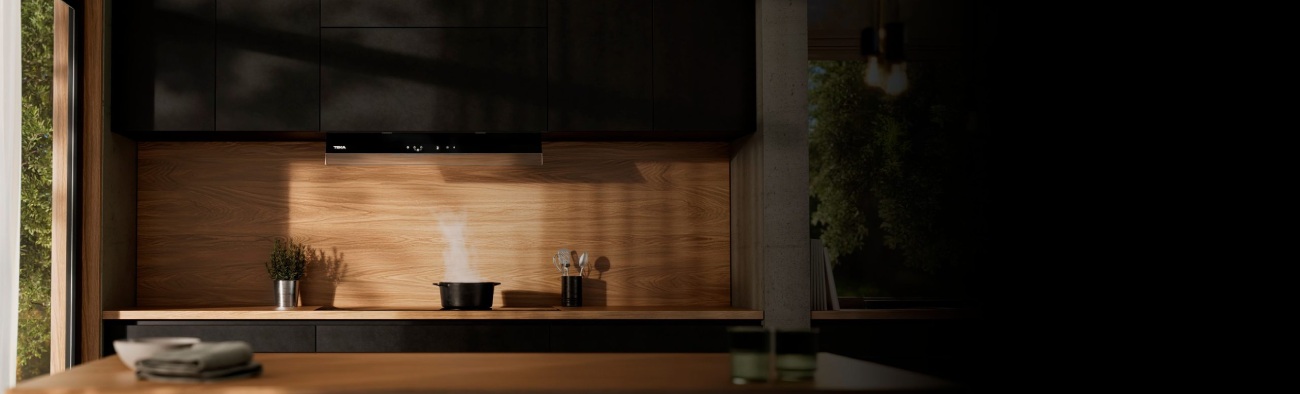
You have a brand-new hood, the drill is ready, and the wall is clear: now what? Before you start drilling holes, it’s worth knowing that the extractor hood height isn’t just a decorative detail: it’s the factor that determines whether your appliance will work properly for years or you might even run into safety issues. Here’s what you need to know about the right cooker hood height according to your type of hob and model, what the regulations say, and why a few centimetres more (or less) really do make all the difference.
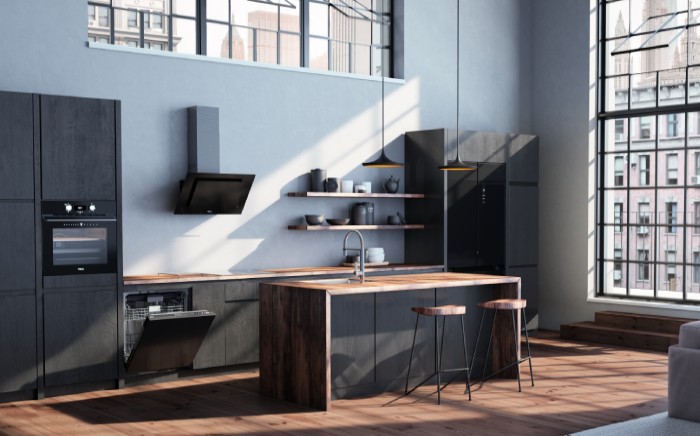
Height isn’t decided by your stature: it’s physics
We tend to think comfort is what matters most when placing appliances. That’s true in many cases, but not when it comes to kitchen hood height. Here, two other bosses are in charge: safety and extraction power. If you install the hood too low, the direct heat from the burners can damage the motor and filters (and on gas hobs, we’re talking about a genuine fire risk). If you fit it too high, it loses suction: smoke, steam and odours disperse before reaching the filters and end up settling on your cupboards, your curtains and, with a bit of bad luck, your hair too. The recommended measurements aren’t arbitrary: they’re calculated so the hood works at its best.
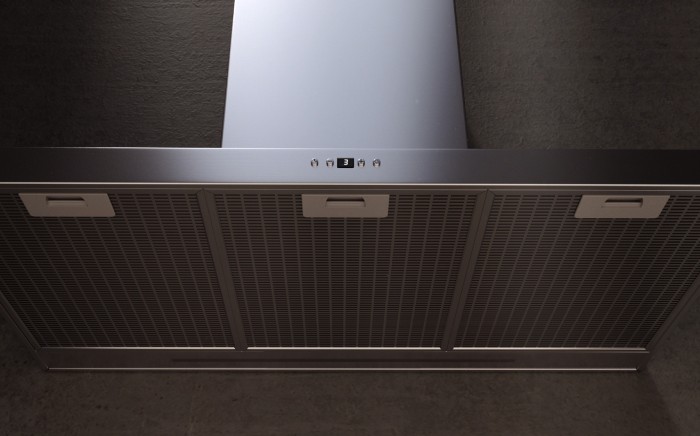
Gas or electric hob: a question that changes everything
As it usually happens, before getting stuck in, stop and ask yourself: Is my hob gas or electric? Because the answer changes the measurements:
- Induction or ceramic hob: between 55 and 60 cm (22–24 inches) above the hob.
- Gas hob: at least 65 to 70 cm (26–28 inches).
Why the difference? Because gas cookers have an open flame, which means more direct heat and a real fire risk. In fact, the European standard UNE-EN 60335-2-31 regulates the safety of extractor hood installation and sets the minimum distance of 65 cm (26 inches) for gas hobs. And it’s no small matter: if something happens and the hood wasn’t at the right distance, your insurance company might not cover the damage. As a golden rule, the lowest part of the hood must never sit less than 45 cm (around 18 inches) above the hob, regardless of cooker type.
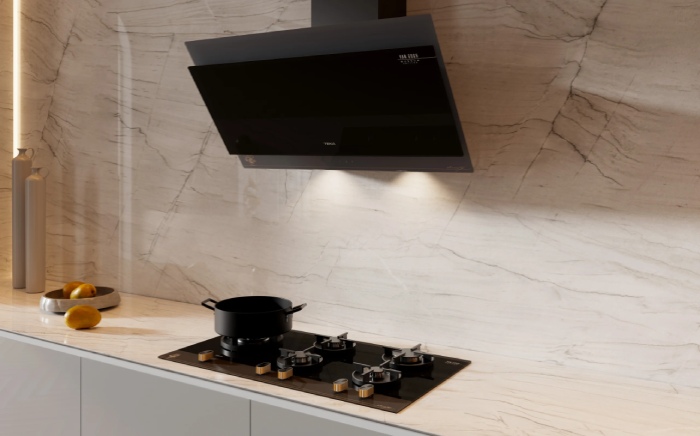
Wall-mounted hoods: the classics that never let you down
These are the most common and the easiest to fit. If yours is vertical, the measurements are the ones we have just covered: 55–60 cm (22–24 inches) for electric and 65–70 cm (26–28 inches) for gas. A common question with choosing the right height for an extractor hood: where exactly do you measure from? It depends on the design. On horizontal hoods, simply measure from the bottom of the hood to the cooking surface. On angled hoods, the reference point isn’t the lower edge but the central point of the filters.
Decorative hoods: the ones that make a statement
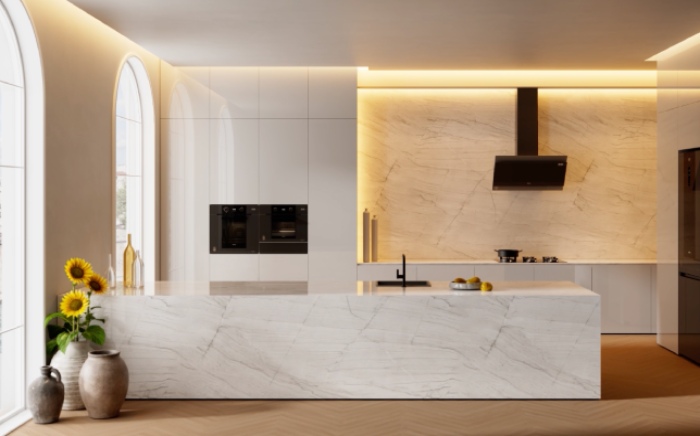
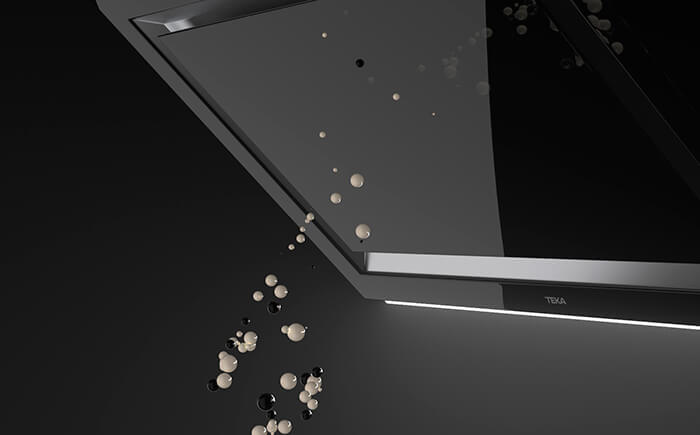
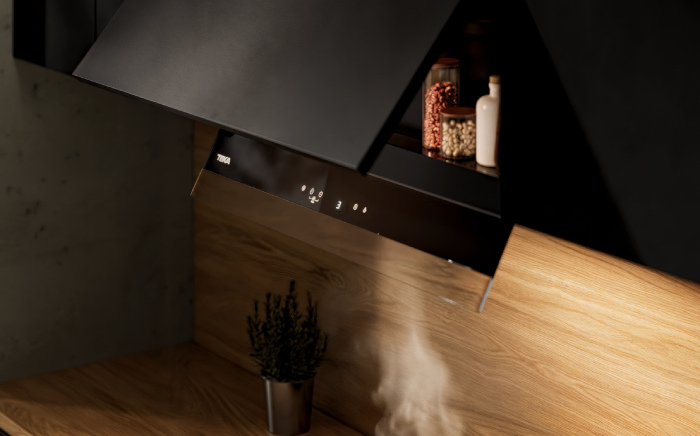
Fitted directly to the wall and proudly on display, decorative hoods have become a design feature in their own right, with finishes in stainless steel, glass, or even matt black, and are very much on-trend right now. They follow the same rules as vertical wall hoods. See: 55–60 cm (22–24 inches) over a ceramic or induction hob, and 65–70 cm (26–28 inches) for gas. Because they tend to have a bulkier body (that characteristic “chimney”), it’s worth checking the model’s dimensions carefully before fitting it, so the whole composition looks balanced and sits at the proper height.
Built-in hoods: discreet and efficient
Integrated hoods are tucked away inside the upper cabinet, making them the dream choice for anyone who prefers minimalist kitchens with clean lines. They work perfectly with both electric and gas hobs, as long as the cabinet housing them is planned at the right height.
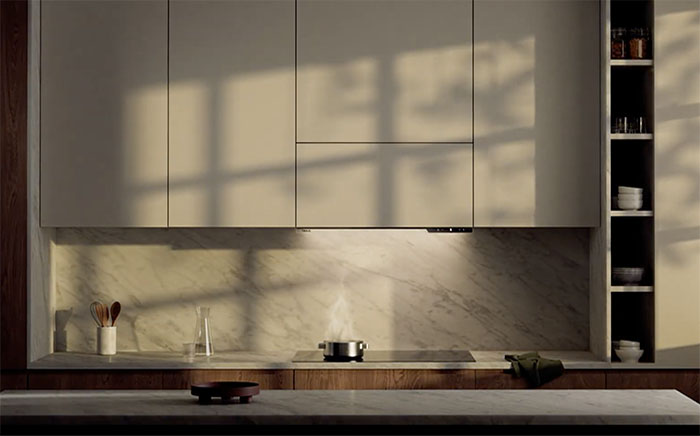
Same rule as before here. If your kitchen is ceramic or induction, the cabinet should be positioned so the hood sits between 55 and 60 cm (22–24 inches) above the hob. If it’s gas, that distance rises to 65–70 cm (26–28 inches), so it’s worth factoring this in from the design stage, so the upper units remain comfortable to use day to day.
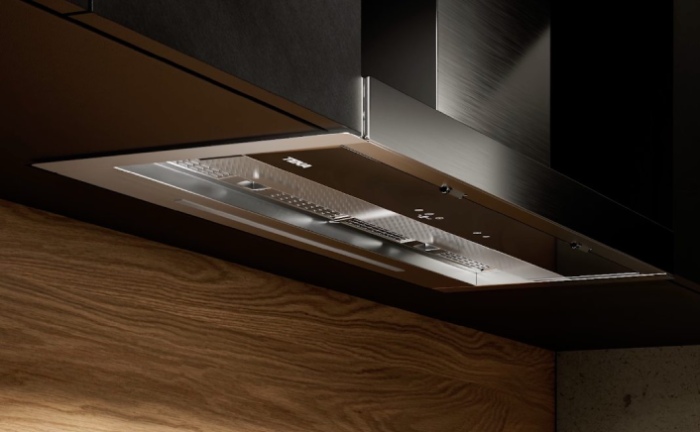
A detail when fitting this type of hood: take a good look at the available models, because some are far simpler to install than others. Teka’s Integra range, for instance, doesn’t require drilling. You check the cabinet measurements (including depth), anchor the brackets, adjust the width to your needs, slot the hood in until it’s flush and add the components one by one. A couple of screwdrivers are enough.
Island hoods: functional showpieces
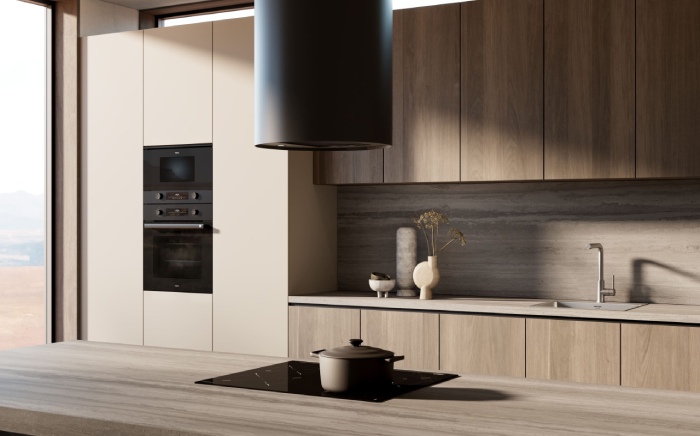
Island hoods hang from the ceiling, suspended directly above the cooking zone, which sits at the heart of the kitchen. They’re a real focal point both visually and operationally, and, because of their exposed position, usually pack more powerful motors: with no walls around them to channel smoke and steam, they have to make the most of every bit of suction. And they do. The recommended height for an island extractor hood is 65 to 70 cm (26–28 inches) above the hob, whether electric or gas. Why a bit higher? Because being open on all four sides, they need extra clearance to capture air properly without becoming a visual obstacle at eyeline every time you are tossing a stir- fry.
Telescopic hoods: the all-rounders
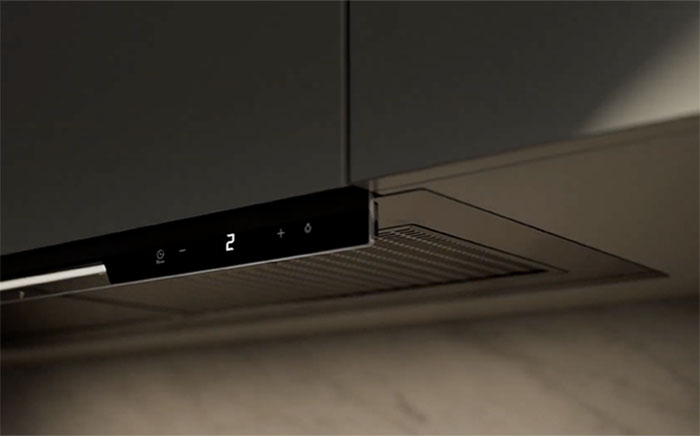
These are the most versatile in the catalogue. They work well with any type of hob and follow the same standard measurements for an extractor hood height (55–60 cm / 22–24 inches for electric, 65–70 cm / 26–28 inches for gas). Their big advantage is flexibility. You just need to slide them in when you’re not cooking and pull them out when your recipes demand it. Clean design at rest, serious suction in action.
The right height = less cleaning and a longer life
Fitting your hood at the right height doesn’t just improve performance; it also makes maintenance much easier. A well-positioned hood gathers less grease in hard-to-reach spots, its filters work at full capacity, and, overall, it lasts longer. Quick summary: A well-installed hood is a hood that lasts. And a properly ventilated kitchen gives you a much cleaner atmosphere. Not just where you cook, but in any adjoining rooms too, especially if you have an open-plan layout.