
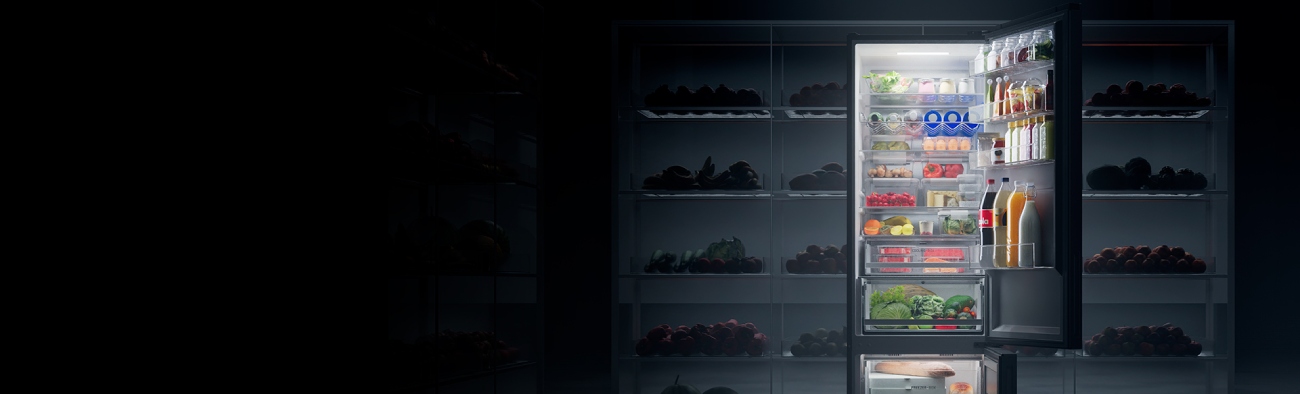
If you feel like your fridge fills itself up the moment you turn your back, and that some food containers go in only to vanish like they have slipped into the wardrobe to Narnia, this post will hopefully give you a little of that lovely fridge LED light on the matter. Good fridge organisation isn’t only about owning a bigger appliance: the way you arrange things, the functions of the fridge itself and its interior design all make a real difference. And here’s the good news: with a few simple changes, and with technologies designed to optimise storage, you can gain genuine usable space and keep your food fresher for longer. Whether you have a small fridge or you’re looking to get the most out of a large-capacity refrigerator, you’ll find what you need right here.
Why it always feels like there’s never enough fridge space
Between the weekly shop, last night’s leftovers and that jar of sauce nobody remembers opening, it’s completely normal for your fridge to look smaller than it really is. The problem, more often than not, isn’t the size: it’s how to use the space.
The most common fridge organisation mistakes
One of the most frequent mistakes is storing food with no system at all, which stops you making the most of your fridge space. When that happens, it’s easy to lose track of items at the back of the shelves and end up wasting both food and money. Other common mistakes that eat into your usable space include:
- Overloading the shelves and blocking the air from circulating.
- Making poor use of the fridge door, storing things there that really shouldn’t be.
- Not using the specific drawers according to their purpose.
- Choosing oversized containers when the contents would fit in something smaller.
- Using awkwardly shaped food containers.
Learning to organise your fridge by zones can transform how usable it is (fridges have UX too, just like websites), and it doesn’t cost you a penny.
How organisation affects food preservation
A well-organised fridge doesn’t just help you gain space. It also helps keep the temperature more even inside and extends the freshness of your food. And that’s good for you, but by now, it’s also a responsibility towards society and the planet. When air can circulate freely between products, the appliance works more efficiently and food keeps for longer.
Interior layout: every zone has its purpose
Each compartment in your fridge is designed for specific temperature and humidity conditions. Respecting that layout is one of the best ways to organise your fridge and optimise the space available.
| Fridge zone | What to store |
| Top shelf | Cooked dishes, leftovers |
| Middle shelf | Cured meats, yoghurts, dairy, eggs |
| Bottom shelf | Fresh meat and fish, properly packaged |
| Drawers | Fruit and vegetables |
| Door | Drinks, milk, sauces and butter |
| Freezer | Frozen food, other cooked items and long-life products |
Source: Storing food safely | Government of Spain
Top shelf: What to store and why
The top of the fridge tends to keep a more stable temperature, which makes it ideal for ready-to-eat products: prepared meals, cured cheeses, yoghurts or last night’s leftovers. It’s the most accessible area and therefore the best suited to whatever you need to reach often. If you keep your leftovers or tomorrow’s lunch there, you’ll also spot them sooner when you come back for them. In a fridge, what you can’t see might as well not exist.
Middle shelf: The most versatile space
The middle shelf is one of the handiest zones in the fridge. Its temperature is consistent, which makes it great for everyday products like cured meats, eggs or foods that don’t need extreme cold. It’s also the best spot for stackable containers and anything that stores well vertically (and for the record, you can move the shelves around too, to create more or less vertical space).

Fruit and vegetable drawers: How to get the best out of them
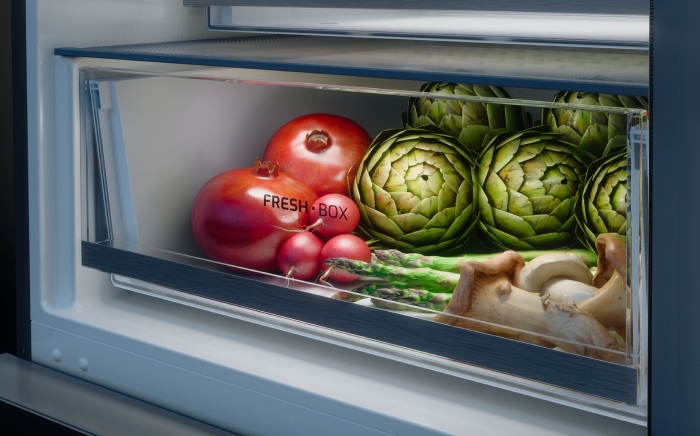
A common question is what the fridge drawers are actually for. The answer is more practical than it seems: they’re designed to provide the specific humidity and temperature conditions that fruit and vegetables need to stay in good condition for longer. Some fridges even have small adjustable vents for controlling that humidity, however rudimentary it might look.
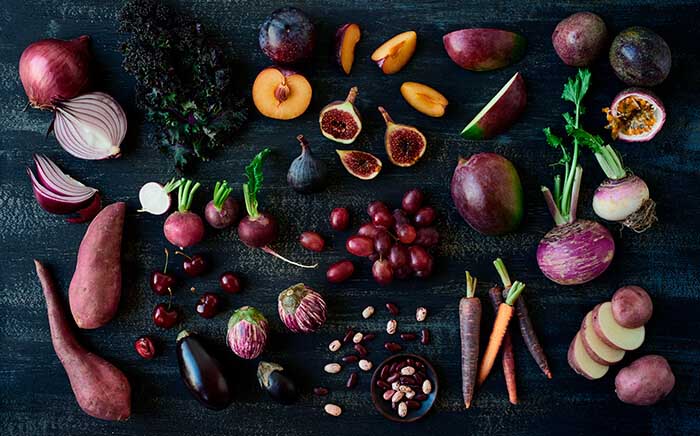
A simple tip: separating fruit and vegetables into different drawers (if your model allows it) and avoiding overfilling them noticeably improves preservation. Many fruits give off ethylene, a gas that speeds up the ripening of nearby vegetables.
The fridge door: What can and can’t go here
The door is the zone that experiences the most temperature fluctuation, since it’s opened and closed several times a day. That’s why it’s perfect for products that cope well with those changes: drinks, sauces, jams, butter or juices. It isn’t, however, the best place for milk, eggs or anything particularly sensitive to temperature changes, even if it’s the most intuitive spot for many people.
The freezer as your space ally
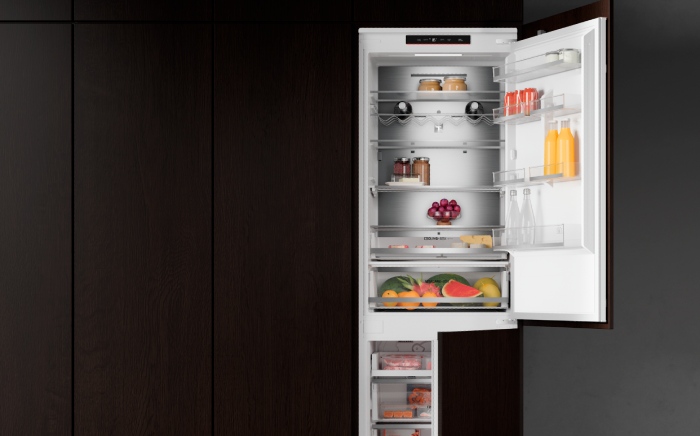
The freezer is probably the great forgotten element in any fridge organisation strategy. Planning your meals ahead and freezing individual portions lets you free up space in the fridge and keep a more efficient rotation of your food (the famous first in, first out: the first thing to go in should be the first to come out). A well-organised freezer is also a freezer that takes up less room than it seems. And if your freezer happens to be frost-free, like Teka’s TotalNoFrost models, you’ll notice a real boost, both in space and in your enthusiasm for freezing things.
How your fridge’s features help you make better use of space
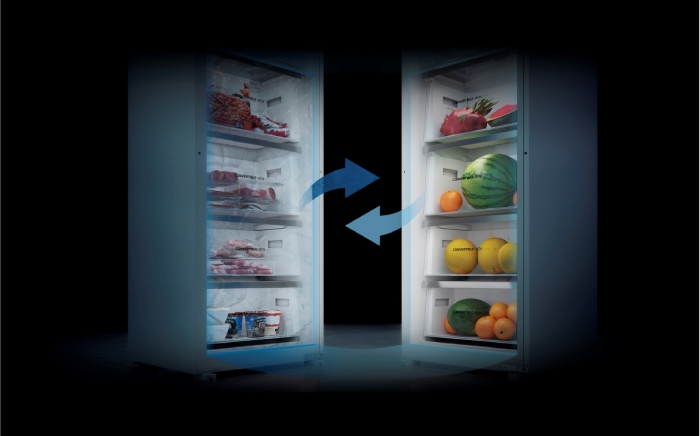
Organising things by hand achieves a lot, but the technology built into the appliance also plays a key role. Let’s be honest, a fifteen-year-old fridge simply can’t perform like a modern one. With the newest models, and here, of course, we’re going to talk about Teka’s, there are systems designed specifically to maximise usable space and improve preservation. Innovation in food preservation is probably one of the most useful and most responsible areas to focus on: it cuts down on waste and helps households to save money.
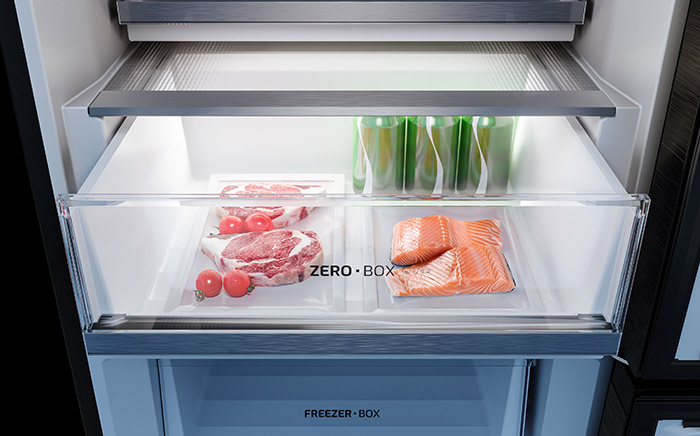
FreshBox and Teka’s specialised drawers
Teka’s FreshBox systems are compartments designed to offer optimal preservation conditions for fruit, vegetables and certain fresh foods. By creating a micro-environment with controlled temperature and humidity, they let you make better use of the space available and reduce that food waste. Less spoiled food means, among other rather important things, more free space in your fridge.
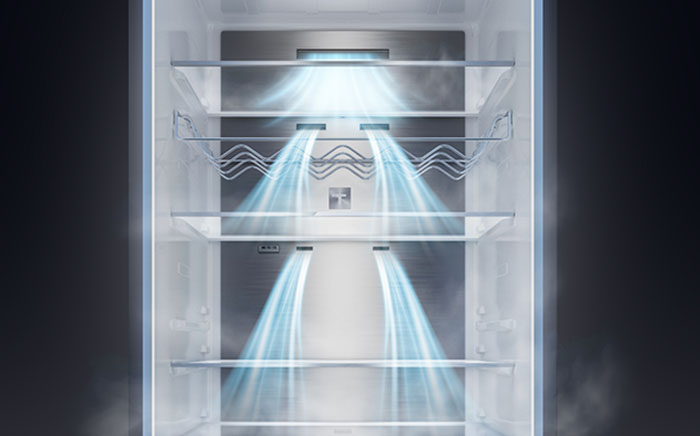
AirFlow control: Even temperature that prevents food waste
Teka’s AirFlow Control technology distributes cold air evenly throughout the inside of the fridge, stopping some areas from cooling more than others. This translates into more uniform food preservation and greater flexibility when it comes to organising the interior: there’s no need to worry about placing each product in the exact spot where the cold reaches properly, because your fridge is already doing the work for you.
¡ 
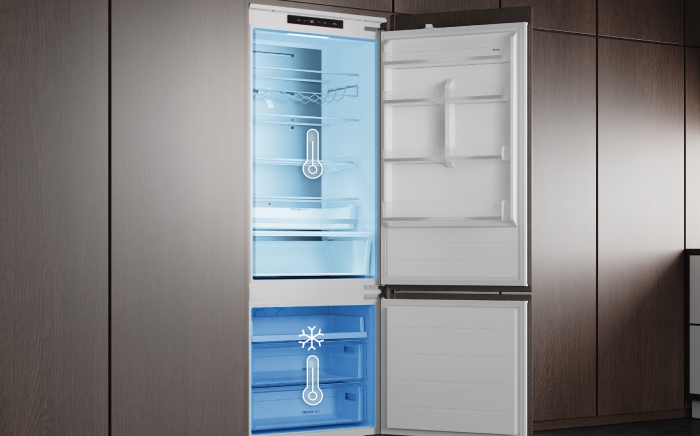
TotalNoFrost: Frost-Free means more usable space
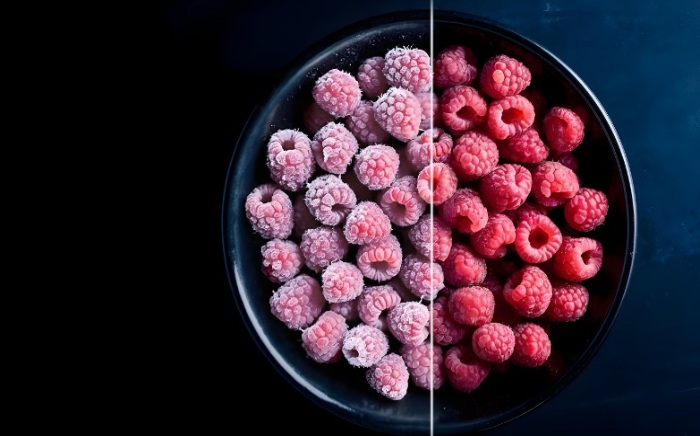
Teka’s TotalNoFrost technology prevents frost from building up in both the fridge and the freezer. Beyond doing away with the chore of defrosting by hand, keeping the appliance completely frost-free has a direct effect on available space: with no accumulated layers of ice, the interior keeps its real dimensions and the appliance’s performance stays constant over time. It also helps extend the working life of your fridge.
Exterior space counts too: Fridges that fit your kitchen
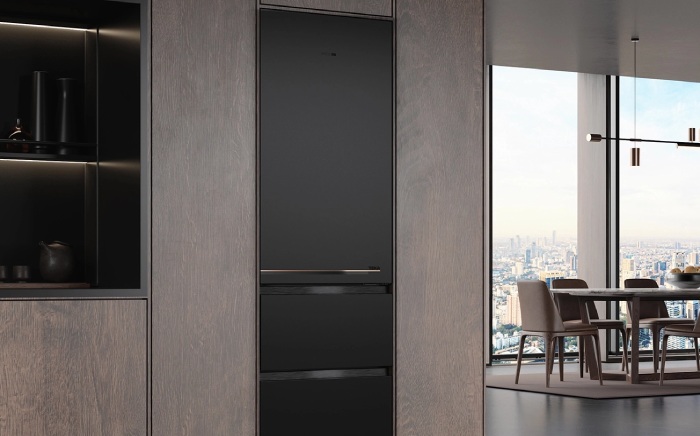
Making the most of your fridge space isn’t only a matter of interior organisation. The exterior design of the fridge also affects how spacious the kitchen feels and how well you actually use the available gap.
Freestanding vs. Integrated fridges: Which takes up less visual space?
Freestanding fridges are independent of the units and offer great flexibility of placement, along with a generally high capacity. Integrated models, on the other hand, sit hidden behind the kitchen cabinet panels, which gives your kitchen a seamless look and a visual sense of greater order and space. The choice between the two depends on the kitchen design and each household’s priorities, of course.
What is an In-Line (Slot-In) fridge and why it uses the gap better
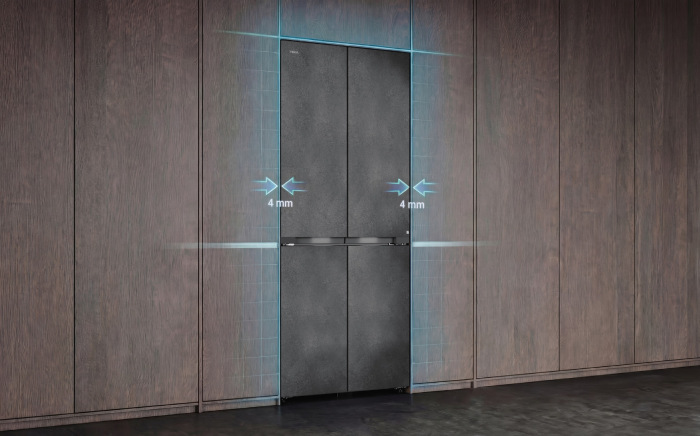
An In-Line, or slot-in, fridge is a model designed to line up perfectly with your kitchen units, so that the doors open without needing extra gaps at the sides. Unlike standard models, which require a side clearance to open the door comfortably, the slot-in fridge fits into the exact gap available and opens fully without hitting the cabinets.
The result? A cleaner look as it fills the gap, better use of space in kitchens where every centimetre counts, and visual continuity between the fridge and the rest of the units. Teka’s In-Line fridge is one of the most complete solutions in this category on the market. It’ll look custom-made, because it sits completely flush.
Built-in Max fridges: more interior capacity in the same space
Teka’s Built-in Max technology solves one of the most common dilemmas in kitchens with limited space: how to have more interior capacity without changing the appliance’s exterior dimensions. Thanks to an optimised interior design, these models offer up to 33% more usable space than a standard built-in fridge of the same measurements, with no need to widen the cabinet gap or carry out any building work.
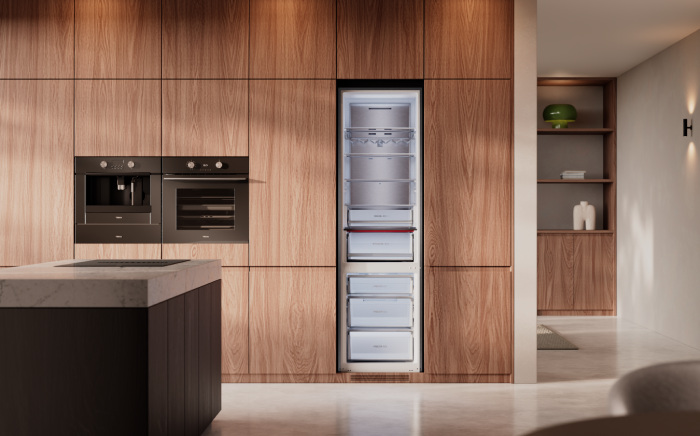
For kitchens where space is scarce, having a large-capacity fridge in the same gap as always is an advantage you notice from day one. If you have a household with several people, something like this makes life a great deal easier and lets you do big shops without worrying quite so much about food going off. And that, rather than nipping out to the shops every five minutes, is a real comfort in everyday life.
Practical tips to gain fridge space today
You don’t always need to change your fridge to get better organisation. These changes of habit don’t cost much and have an immediate impact.
Organise by category and FIFO rotation
The FIFO method (First In, First Out) means always placing the oldest products at the front and the newly bought ones behind. It’s the same system supermarkets use, and it works just as well at home. This rotation stops food from expiring forgotten at the back of the fridge and optimises the available space naturally.
Containers that make a difference
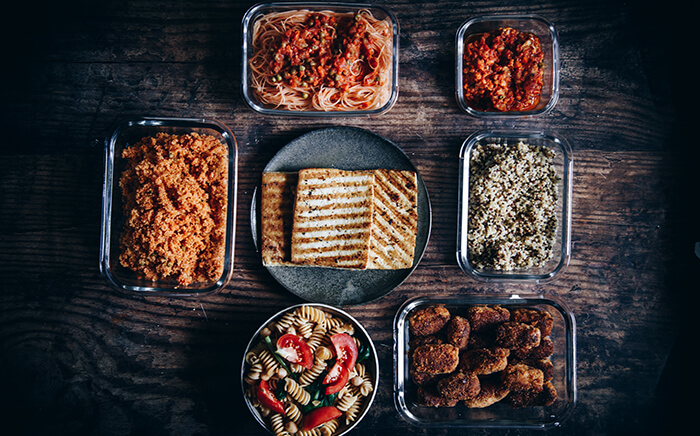
Rectangular, stackable containers use space far better than round ones or awkward shapes. Transferring food into this kind of container after the shop might seem like an extra step, but the results in terms of order and capacity are remarkable. A small, well-organised fridge with good containers can outperform a large one used with no system at all.
How often to check and reorganise your food
A weekly check (timed with your shop) is usually enough to keep things in order and stop the fridge from accumulating expired products or ones about to be. Face it: you’ll have to throw out that half a lemon. Remember too, that fresh products like meat and fish need to be properly packaged and leak-proof. Otherwise they don’t just make a mess of the fridge, they’re also a source of food contamination nobody needs.
Frequently asked questions
How do I know if my fridge is too small for my household?
If you regularly need to store food outside the fridge, you struggle to organise products without them piling up, or you shop very frequently because nothing else fits, it’s probably time to consider a larger-capacity model. As a general guide, around 50 to 60 litres per person in the household is the usual recommendation, just to give you an idea.
Which foods take up more space than they should?
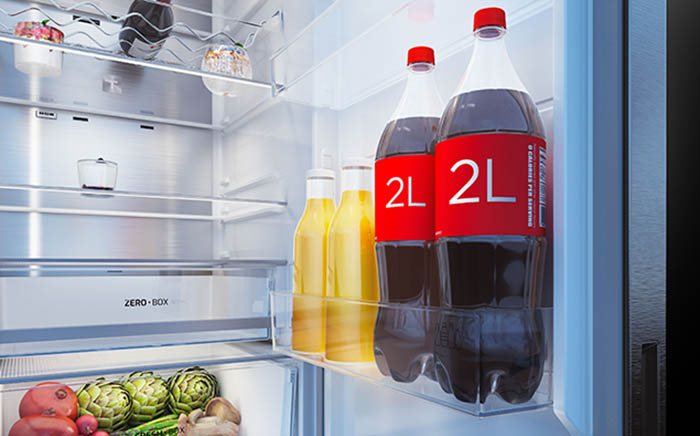
Large bottles, awkwardly shaped packaging and half-used containers left uncovered are usually the ones to blame. Some fridge models include shelves that take 2-litre bottles, in case you’d like to look into it. In general, using stackable, rectangular containers and transferring food into more compact ones once opened helps you claw back quite a bit of space. And you’ll get a better visual sense of where everything is, without leaving the door open for half an hour every time you need to grab something.
Does a bigger fridge use much more energy?
Not necessarily. Today’s highly energy-efficient models can offer great capacity with very modest consumption. The energy rating and the appliance’s technology (such as TotalNoFrost or AirFlow Control) are more decisive factors than size alone when working out real energy use.
What’s the difference between an In-Line fridge and an integrated one?
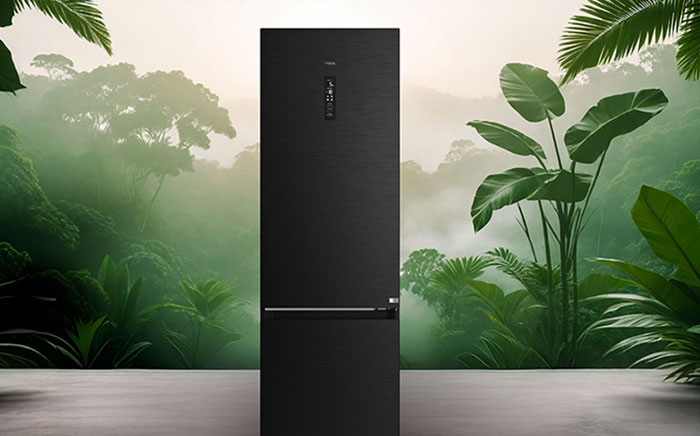
An integrated fridge is completely hidden behind the kitchen cabinetpanels, achieving a fully seamless look. An In-Line or slot-in fridge, on the other hand, is visible but designed to line up precisely with the units, open its doors without needing extra side gaps and make the most of the available space, without you having to worry about the appliance getting enough air (Teka has already taken care of that). It’s a middle-ground solution between the freestanding model and the fully integrated one, particularly appealing for kitchens where space and looks matter in equal measure.
Whether your next step is reorganising what you already have or choosing a new model, the key is understanding how space works. A good fridge doesn’t just store food: it organises your kitchen better, reduces waste and simplifies everyday life. And that, in the long run, is always worth it.