

Some decisions only come round once every several years, like choosing the fridge for your kitchen. And just when it seemed enough to decide on capacity, finish or energy rating, along come new concepts: integrated fridge, built-in fridge, slot-in fridge. So what does all this new terminology actually mean when it comes to your real kitchen? Well, that although they all look more or less alike, they don’t all involve the same installation, nor the same needs and user experience.
The slot-in fridge, or In-Line, in Teka’s case, is probably one of the types you’ll have come across most while searching to fit out a kitchen. In essence, it’s a design conceived to achieve a visually cleaner look, make better use of space and simplify installation without giving up on a careful aesthetic. But to go a little deeper, here’s a short guide explaining exactly what a fridge like this means, why it’s different from an integrated or freestanding fridge, and when it might be the option that fits you best (quite literally).
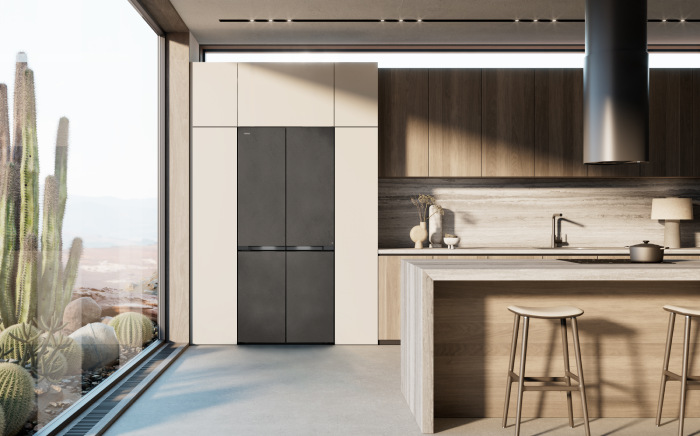
What does In-Line (slot-in) mean in a fridge?
A technical name for a simple idea. A slot-in fridge, also called In-Line by Teka, is a fridge designed to sit perfectly aligned with your kitchen units, keeping its front panel visible while blending in visually with the rest of the run.
And this isn’t only about looks, pleasant as they are. The In-Line design combines several construction solutions so that the fridge takes up exactly the space set aside for it in the kitchen, making the most of it, and offers straightforward installation. At a glance, the main features of an In-Line, slot-in Teka model would be:
- A front panel aligned with the kitchen
- A depth of 600 mm to match the standard for cabinetry.
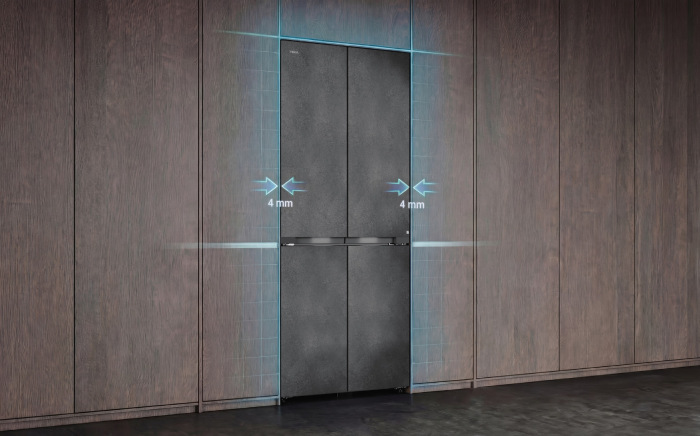
- Just 4 mm of side clearance, which adds up to a lot when space is tight.
- Patented dual-axis hinges, which let the doors open comfortably even when the fridge is installed next to a wall or a cabinet, without knocking into
- Heat dissipation at the rear, helping it integrate cleanly into the kitchen as a whole.
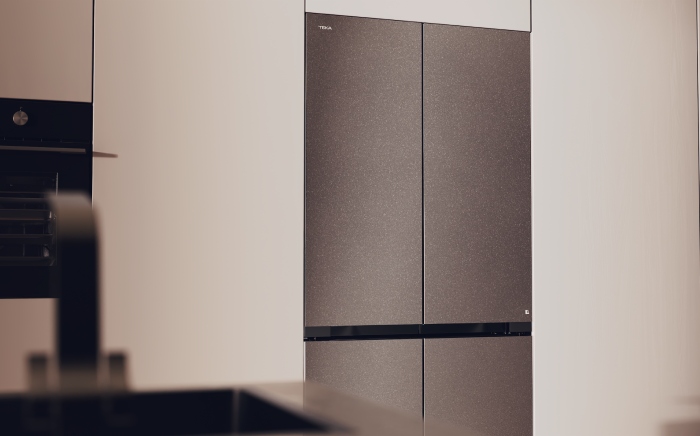
In other words, the fridge stops being something that sticks out or breaks the visual harmony and becomes just another part of the kitchen’s design. Brought down to everyday life: remember trying to pull out the vegetable drawer and getting nowhere because the door wouldn’t open enough? Well, with a model like this that no longer happens: no more rescuing a courgette while scraping the skin off your whole hand.
Slot-in, integrated or freestanding fridge: which one to choose?
Everyone talks about different installation types. Sometimes they’re even treated as synonyms, when in fact they have little to do with one another: they simply describe different solutions. Which one you choose depends as much on the kitchen design as on the finish you’re after.
Slot-in fridge
The slot-in fridge, In-Line, keeps its exterior design fully visible, but it’s designed to line up with the units and take up as little space as possible. Thanks to its depth and its opening system, it achieves a very integrated look without needing to hide the appliance behind a decorative panel or tuck it inside a cabinet. It’s a combination of design, functionality and particularly straightforward installation.
Integrated fridge
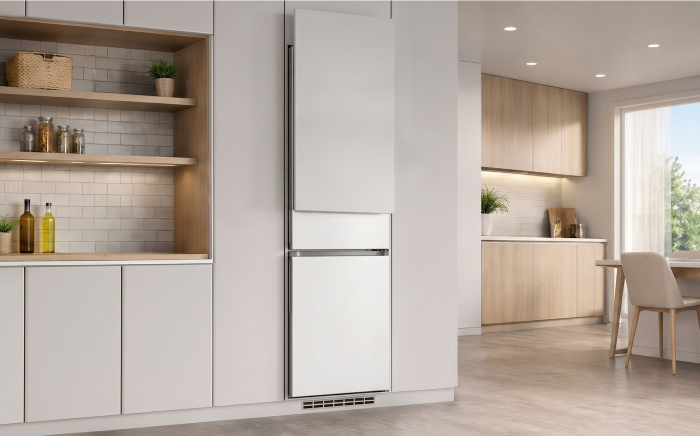
The name gives you the key. An integrated fridge is designed to sit completely hidden within the units. In this case, the appliance is installed inside a tall cabinet, and a panel matching the rest of the kitchen is fixed onto its door. The result is total integration: at a glance, it’s hard even to tell where the fridge is. That’s precisely why installation calls for a specific cabinet and a more involved fitting, in which the fridge is fixed to the unit and the decorative door becomes part of the opening system itself.
And a built-in fridge?
The term built-in fridge tends to cause quite a bit of confusion. It’s often used as a synonym for an integrated fridge, although — depending on the manufacturer — it can also refer to models made to be installed within a cabinet gap without necessarily being hidden behind a decorative door. The appliance’s controls do stay in view. They may come ready for a panel to be fitted in the same tone as the rest of the units (panel-ready). Before making a decision, it’s worth checking the model’s specifications. Two fridges can look similar on paper and yet involve completely different installation systems.
Freestanding fridge
This is the best-known model and the most flexible. It doesn’t need a specific cabinet and can go in practically any kitchen, as long as you respect the ventilation clearances specified by the manufacturer. Its great advantage is precisely that freedom of installation. In exchange, it tends to have more visual presence and may stand out from the line of the units, something many contemporary kitchens try to avoid, in the name of a more personalised look that goes beyond sticking a few classic decorative magnets of questionable design on the door.
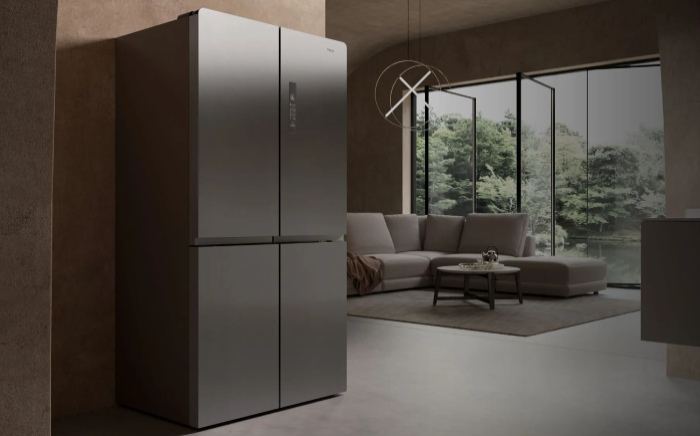
Quick comparison
To picture the differences more clearly, this table sums up the main features of each installation type.
| Feature | Slot-in fridge (In-Line) | Integrated fridge | Freestanding |
| Exterior look | The front stays visible, but sits aligned with the units | Completely hidden behind a door in the same finish as the cabinets | The appliance is fully visible |
| Visual integration | Very high | Total | Low to medium |
| Needs a specific cabinet? | No | Yes | No |
| Installation | Position it, adjust it, done | Requires fitting the fridge into a unit and mounting the decorative panel | Very simple |
| Opening system | Dual-axis hinges to ease opening next to cabinets or walls | Depends on the fixed-door or sliding-rail system of the unit | Conventional hinges |
| Ideal for… | Those after a clean, contemporary kitchen design without hiding the fridge | Kitchens where you want the appliances to go completely unnoticed | Users who prioritise flexibility or are replacing an existing fridge |
As tends to happen with many kitchen design decisions, there’s no single right option. The key is choosing the system that best suits the space available, the style of the units and each household’s needs.
The advantages of choosing a slot-in fridge for your kitchen
It has them, truth be told. The look and finish give a clean impression that contributes to the overall balance of the kitchen. But it’s also very functional. It “looks good” while genuinely making the most of every last possible centimetre, with very simple installation, and it improves the everyday experience of using it, which is where you appreciate it most.
More interior space
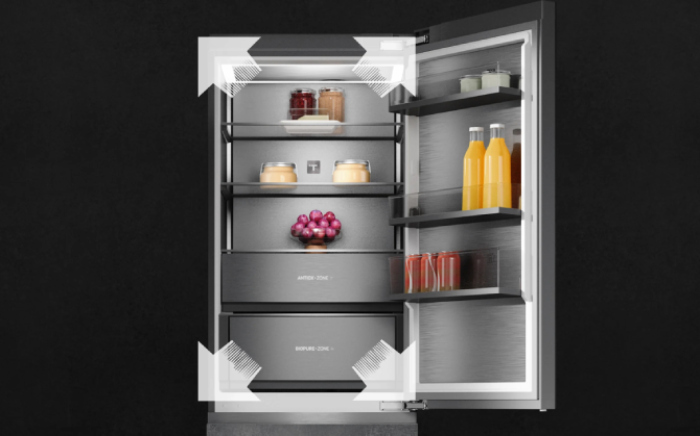
One of the most interesting things about In-Line fridges is that the design work isn’t only appreciated on the outside. Thanks to the optimisation of internal components and the use of thinner insulating materials, it’s possible to increase usable capacity. On certain models, this design allows for up to 15% more capacity than conventional fridges of a similar size or, in Teka’s case, compared with other slot-in models: its range includes models with up to 409 litres of interior capacity.
Translated into everyday life: more room to organise the weekly shop without having to find extra space in the kitchen. And that’s always welcome, so you don’t have to go food shopping quite so often through the month, or for those occasions when you pop out for “a couple of things” and come back with thirty, one of those socially accepted little lies.
Simple installation, easier life
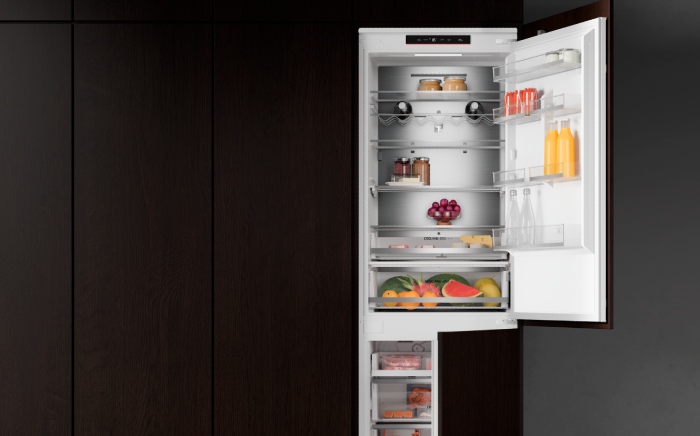
The fridge is positioned, adjusted and left aligned with the units, cutting down both the time and the complexity of installation. Compared with an integrated fridge, which needs a specific cabinet and the mounting of a decorative door, the slot-in system simplifies the process considerably. This doesn’t mean one system is better than the other; they simply meet different needs.
What kind of kitchens is a slot-in fridge ideal for?
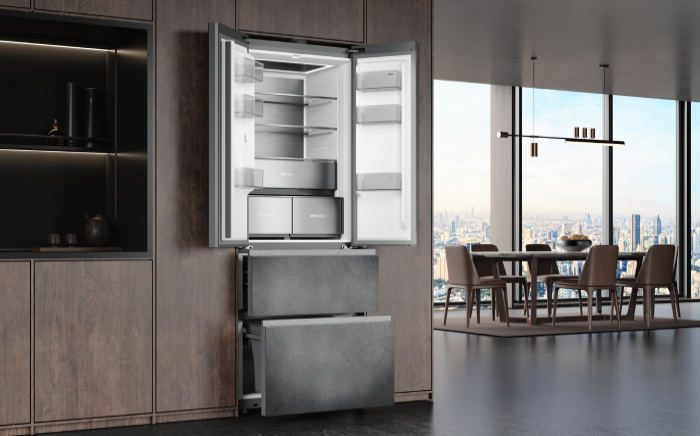
One of the advantages of the In-Line design is that it isn’t meant for just one type of home. It can be a very appealing option in a range of situations:
- Kitchens open to the living room, where visual continuity takes on greater importance.
- Minimalist-inspired spaces, in which every element seeks to blend in with the rest.
- Compact kitchens, where an orderly layout helps improve the sense of space and makes better use of it.
- Projects looking for a fridge that’s visible but perfectly aligned with the units.
- Users after an alternative to an integrated fridge, keeping a clean design without needing to hide the appliance.
All in all, the slot-in fridge is designed for those who value both design and functionality, and who are looking for a solution that balances both.
Frequently asked questions
Does a slot-in fridge need a special cabinet?
No. That’s one of the main differences from an integrated fridge. While an integrated fridge is designed to be installed inside a tall cabinet and hidden behind a decorative panel, a slot-in fridge keeps its exterior finish visible and is meant to line up with the kitchen’s standard units. That said, as with any appliance, it’s important to respect the dimensions and installation guidance given by the manufacturer to ensure it works properly.
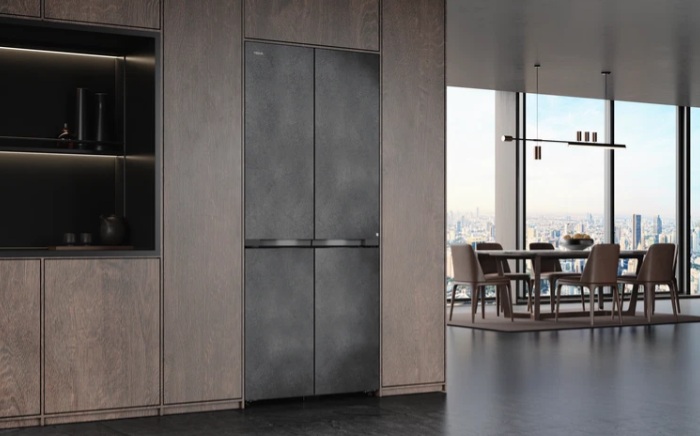
Is a slot-in fridge for in any kitchen?
In most cases, yes. One of the very aims of the In-Line design is to make it easier to fit the fridge into different kinds of kitchens without complex solutions. Its 600 mm depth, minimal side clearance and hinge system let it adapt easily to the usual layout of the units. Even so, before choosing any model it’s worth checking the measurements available and always following the manufacturer’s guidance.
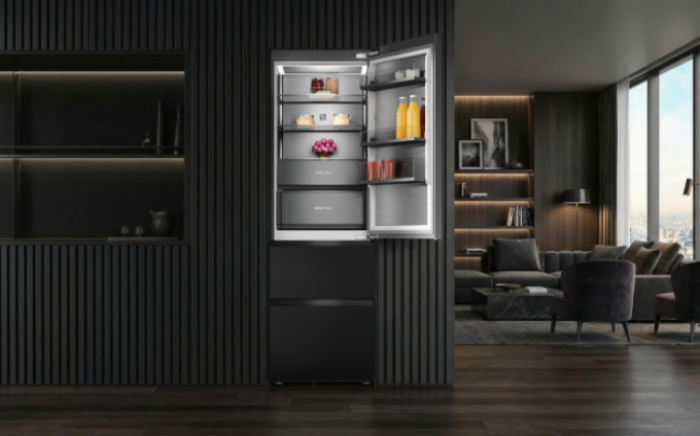
What’s the difference between slot-in and fully integrated?
Probably the most common question of all. An integrated fridge disappears completely behind a door in the same finish as the rest of the kitchen. Visually, it’s impossible to tell where the units end and the appliance begins. An In-Line (slot-in) fridge, on the other hand, keeps its exterior finish on show. The difference is that it’s designed to sit perfectly aligned with the units. In short, both aim for a harmonious kitchen, but they achieve it in different ways.
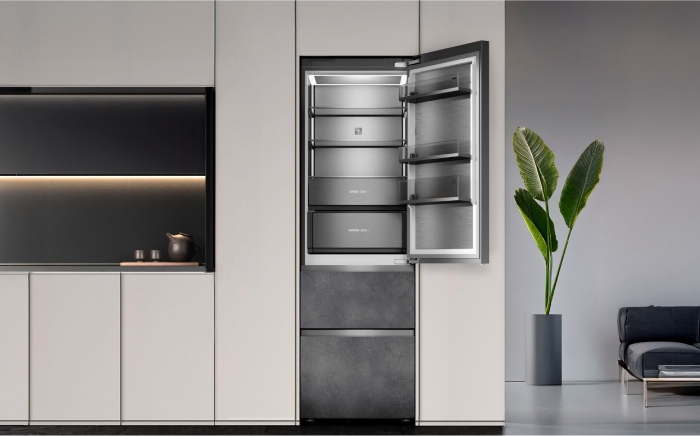
Quick summary
- Want to hide the fridge completely? Choose an integrated fridge.
- Prefer it aligned with the units but keeping its visible design? Choose a fridge with In-Line (slot-in) design.
- Maximum flexibility to install it wherever you like? A freestanding fridge may be the best option.
If you’re after absolute integration with the units, an integrated fridge will still be the best choice. If you’d rather the fridge kept its own identity while sitting perfectly aligned with the rest of the kitchen, the In-Line (slot-in) design is a modern, practical and visually balanced solution. Because a well-designed kitchen isn’t only recognised by how it looks on day one. It’s also recognised by how it works in five, ten or fifteen years. Details like a door that opens comfortably, a fridge that doesn’t break the line of the units, or every centimetre being well used are those quiet decisions that barely draw attention…precisely because everything fits.